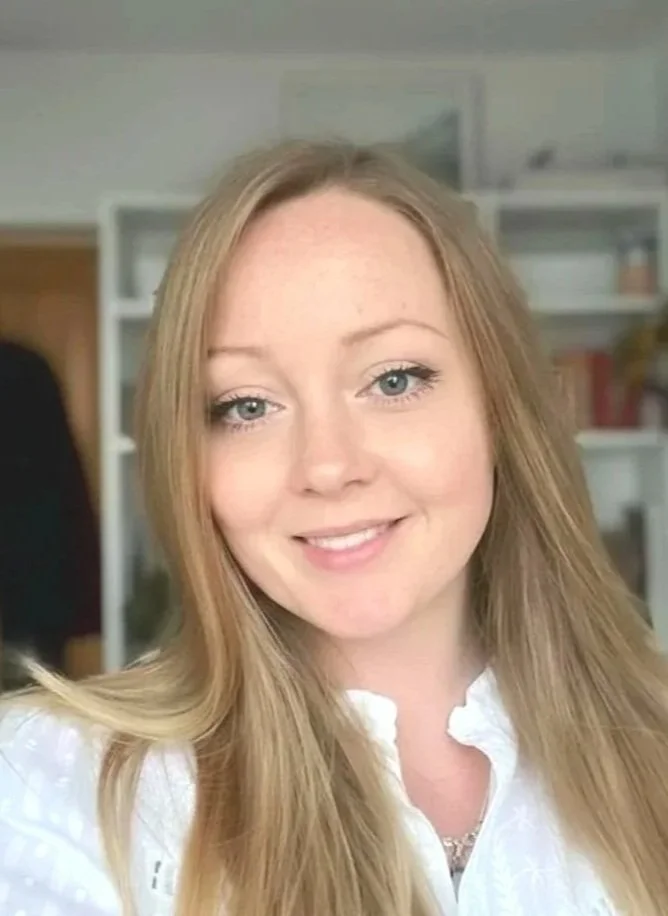
Hi, I’m Chloe!
I’m Dr. Chloe Tulip, a Psychologist and researcher.
I know what it’s like to live with broken sleep.
For nearly ten years, I lived with insomnia. Most nights, I'd manage to fall asleep in the early hours of the morning with just a few hours in the bank. Other nights, I'd lie in bed staring at the ceiling, wondering how I'd get through another busy day.
I started to become afraid of nighttime and the daytime, too. I was exhausted and it seemed never-ending. Well-meaning advice poured in. "Just relax.", "Have you tried chamomile tea?", "Try a walk in the morning." It all felt useless and so disconnected from the reality of living with long-term sleep issues.
What I learned changed everything.
I knew I needed to make a change, so I started researching sleep. I quickly learned that the hacks and quick fixes were pointless. I needed to retrain my brain's relationship with sleep by learning how it actually works, understanding my patterns, and using evidence-based tools. It worked, and within weeks my sleep was so much better.
That was the start of my journey into over a decade of scientific study including:
A BSc in Psychology
A Master’s degree in Clinical Psychology, specialising in Wellbeing.
A PhD in Psychology focusing on Sleep
Why I do this
Sleep advice online is often shallow, repetitive, or fear-based. It's frustrating because I know genuinely useful tools exist, backed by decades of good evidence. I wanted to create a space where tired people can find clear, practical, science-backed guidance that explains why things work, not just what to do.
I know that sleep is a skill. It can be improved and not by just going outside for a walk or setting the exact bedroom temperature, but by changing the way we think about sleep. It's about getting rid of the dread, learning the science, and experimenting to build a rhythm that works for your life, giving you the energy to enjoy your days again.
What makes my approach different
Every tool I teach is rooted in research but also takes into account real-world routines and human behaviour. I’ve been where you are you, and I understand both the science and the struggle which is why I use positive psychology, habits research and neuroscience alongside sleep science to help you feel better in the day as well as the night.